
If you’ve ever filled a glass of water from the tap and thought twice before drinking it, you’re not alone. The whole house filter vs reverse osmosis debate comes up constantly for Northwest Indiana homeowners, and for good reason. Choosing the wrong system means either overspending on protection you don’t need, or under-protecting the water your family actually drinks. Here’s how to figure out which one fits your home.
What’s Actually in Northwest Indiana’s Water?
Northwest Indiana’s water supply isn’t simple. Depending on where you live, your water comes from two very different sources, and each one brings its own set of concerns.
Homes in Portage, Valparaiso, Chesterton, Hobart, and most of Lake County get their water from Lake Michigan, treated by municipal utilities. That treatment process does its job removing bacteria and pathogens, but it introduces chlorine and chloramines as disinfectants. You’ve probably noticed that slightly chemical taste or smell coming from the tap. That’s the chloramine. It’s not dangerous at the levels used, but it’s unpleasant, and a lot of people don’t want to cook with it or drink it every day.
Homes in more rural parts of Porter County and Lake County, especially in areas like Hebron, Kouts, and Winfield, often rely on well water. Well water skips the chlorine problem, but it brings sediment, possible nitrates from agricultural runoff, and other contaminants that don’t come with any municipal treatment at all. And then there’s hardness, which affects nearly everyone in the region. Northwest Indiana sits on soil that’s loaded with calcium and magnesium deposits left behind by glacial activity thousands of years ago. The result is some of the hardest water in the Midwest, and you’ve probably seen the evidence. White scale around your faucets, cloudy dishes out of the dishwasher, a filmy residue in the shower. That’s hard water at work.
According to the U.S. Geological Survey, water with a hardness level above 121 mg/L is classified as “hard,” and many areas of Northwest Indiana routinely exceed that threshold. Hard water doesn’t just affect taste. It shortens the life of water heaters, clogs pipes over time, and wears out appliances faster than they should wear out.
What Is a Whole House Water Filter?
A whole house filter, also called a point-of-entry filter, is installed where the water supply line enters your home. Every drop of water that flows through your house goes through it, from the kitchen tap to the shower to the washing machine.
Most whole house filters are designed to handle sediment, chlorine, chloramines, and some organic compounds. That makes them a great fit for municipal water users who are mainly concerned about taste, smell, and protecting appliances from sediment damage. If you’re in an older Portage or Hobart home with aging pipes, sediment is a real issue, and a whole house filter tackles it at the source before it ever reaches your water heater or dishwasher.
Here’s the thing, though. A whole house filter doesn’t remove dissolved minerals like calcium and magnesium, and it doesn’t remove heavy metals, nitrates, or fluoride at the level you’d actually want if those are your concerns. It’s a broad first line of defense, not a precision tool. Maintenance is pretty manageable. Most systems need a filter cartridge replacement somewhere between every 3 and 12 months, depending on your water quality and how much water your household uses. And when the system is properly sized for your home’s flow rate, you won’t notice any drop in water pressure.
What Is a Reverse Osmosis System?
A reverse osmosis system, usually called an RO system, is a point-of-use filter. It’s installed at a single location, most commonly under the kitchen sink, and it filters only the water you draw from that dedicated faucet.
But what it does to that water is genuinely impressive. An RO system forces water through a semi-permeable membrane that removes 95 to 99 percent of dissolved contaminants. We’re talking heavy metals like lead and arsenic, nitrates, fluoride, chlorine, chloramines, and in some cases bacteria. The water that comes out of an RO faucet rivals or outperforms most bottled water. (And yes, that means you can stop buying cases of bottled water, which adds up fast.) The EPA’s guidance on drinking water contaminants is a useful resource if you want to dig into exactly what can end up in your water and at what levels.
There are trade-offs worth knowing about. An RO system is slower than a regular tap. It stores filtered water in a small tank under the sink, and that tank has limits. The system also generates wastewater, typically around 3 to 4 gallons of wastewater for every gallon of filtered water, though newer and more efficient systems are closing that gap. And because it’s point-of-use, your shower water, laundry water, and toilet water don’t get filtered at all. Filter and membrane replacement runs every one to three years depending on usage and your incoming water quality.
How Do the Two Systems Compare Side by Side?
Here’s a direct comparison so you can see the differences clearly.
Coverage is the biggest one. A whole house filter touches every water outlet in your home. An RO system only covers the dedicated tap it’s connected to, which is usually the kitchen sink. If your concern is about showering in chlorinated water (and it’s worth knowing that chlorine can absorb through skin and inhale as steam in a hot shower), a whole house filter addresses that. An RO system doesn’t.
Filtration depth is where RO pulls ahead. For dissolved contaminants, heavy metals, nitrates, and the like, nothing beats a reverse osmosis membrane. A whole house filter is very good at sediment and chlorine, but it’s not built for that level of precision. On cost, the two systems flip-flop depending on how you look at it. A whole house filter typically costs more upfront to install because it involves more plumbing work. But the per-gallon cost is lower because there’s no wastewater. An RO system is generally less expensive to install, but the wastewater factor raises the long-term cost per gallon. Maintenance on both is manageable. Whole house filters need cartridge changes. RO systems need filter and membrane swaps every year or two.
You can explore Plumbing Pilots’ whole house water filter and reverse osmosis installation services to get a better sense of what each installation actually involves for a home in this area.
When Does Each System Make Sense for NWI Homeowners?
A whole house filter is the right call when your main concerns are chlorine taste and smell, sediment in your water, or protecting your appliances and pipes from damage. If you’re in a home built before 1990 in Lake Station or Merrillville, sediment from older pipes is a real and ongoing issue. A whole house filter catches it before it reaches your water heater and shortens its life. It’s also the better choice if you want cleaner shower water, since the skin and steam exposure to chlorinated water in a hot shower is a legitimate concern that a point-of-use system can’t solve.
An RO system makes more sense when your priority is drinking and cooking water quality at the highest possible level. If you’ve got concerns about nitrates from agricultural runoff (a real issue in the rural parts of Porter County), heavy metals, or fluoride, an RO membrane handles all of those in ways that a whole house filter simply can’t. It’s also the right move if you’ve been spending real money on bottled water every week. Most families spend between $600 and $1,200 a year on bottled water. An RO system pays for itself faster than most people expect.
Here’s the honest answer for a lot of NWI homeowners: you might need both. A whole house filter for sediment and chlorine protection throughout the house, paired with an RO system under the kitchen sink for drinking and cooking water. This combination covers every angle. And it’s more affordable as a package than most people assume when they first start looking into it.
Don’t Forget About Water Softeners
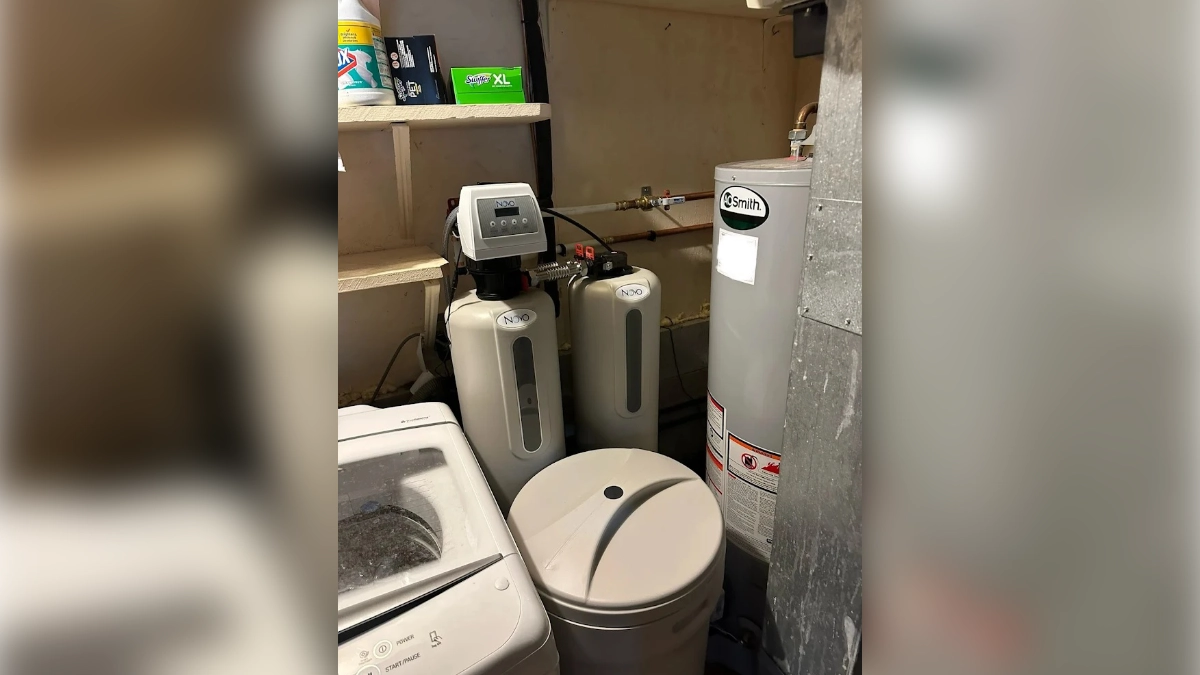
A water softener is not the same as a water filter, and this is a point that trips up a lot of homeowners. A water softener specifically addresses hardness, meaning it removes calcium and magnesium from the water through an ion exchange process. It doesn’t filter out sediment, chlorine, nitrates, or other contaminants.
Given how hard the water is throughout Northwest Indiana, a softener is often warranted alongside a filtration system. You can have the best RO system in the world under your kitchen sink, but if the rest of your water is still hard, your water heater is still scaling up, your pipes are still accumulating buildup, and your appliances are still working harder than they need to. A softener solves the hardness problem. A filter or RO system solves the contamination and taste problem. They do different jobs, and for many NWI homes, both are worth having. Plumbing Pilots’ water softener and water treatment services in Northwest Indiana cover the full picture if you want to look at all three options together.
Why Professional Installation Actually Matters Here
This is one of those situations where doing it yourself or going with the cheapest quote really can cost you more in the long run. Improper installation of a whole house filter can cause pressure problems, leaks at the connections, or a system that’s undersized for your home’s water demand and doesn’t actually filter effectively.
With an RO system, the membrane and filter housing have to be connected correctly, the drain line has to be routed properly, and the storage tank has to be the right size for your household’s usage. Get any of that wrong and you’re either dealing with leaks under the sink or a system that runs out of filtered water before your family’s through with dinner. A licensed Journeyman plumber has the training to size the system correctly for your home, integrate it with your existing plumbing without creating new problems, and make sure the installation doesn’t void your equipment warranty. That’s not a minor detail.
Frequently Asked Questions
How do I know if I need a whole house filter or an RO system for my home in Northwest Indiana?
The answer really comes down to what your water problem actually is. If you’re dealing with chlorine taste and smell, sediment, or water that’s rough on your appliances, a whole house filter is probably your first move. If your concern is what you’re drinking and cooking with, especially if you’re in a rural part of Porter County where nitrates from farm runoff are a possibility, then an RO system is what you want. At Plumbing Pilots, we serve homeowners all across Northwest Indiana, from Portage to Valparaiso to Crown Point, and we see both situations regularly. The best starting point is understanding what’s actually in your water, and we’re happy to talk through that with you before recommending anything.
Is Northwest Indiana’s tap water safe to drink without a filter?
Municipal water in Northwest Indiana meets EPA standards for safety, so technically yes, it’s treated and it meets legal thresholds. But “meets legal standards” and “tastes good and has zero contaminants” aren’t the same thing. Chloramines, trace minerals, and occasional sediment from older distribution lines are real issues in parts of Lake and Porter Counties. Well water users in more rural areas have even more to think about, since there’s no municipal treatment in place. Plumbing Pilots works with homeowners throughout Northwest Indiana, and we’ll tell you honestly what we’re seeing in your area and what level of filtration actually makes sense for your situation.
Can I install a whole house filter and an RO system at the same time?
Absolutely, and honestly, that combination is what we recommend most often for Northwest Indiana homes. The whole house filter handles the sediment and chlorine that affects every tap, appliance, and shower in the house. The RO system under the kitchen sink takes care of your drinking and cooking water at a much deeper filtration level. They work together without any conflict. Plumbing Pilots installs both systems throughout Northwest Indiana, including in Hobart, Chesterton, Munster, and St. John, and we can do both in a single visit so you’re not scheduling two separate jobs.
How often do these systems need maintenance, and can I do it myself?
Whole house filter cartridges typically need to be replaced every 3 to 12 months, depending on your water quality and household size. RO filters need replacement roughly every 12 months, and the membrane itself usually lasts 2 to 3 years. The cartridge swaps themselves are something most homeowners can handle on their own once the system is installed and explained. But the actual installation and the first setup should be done by a licensed plumber, especially in an older home. Plumbing Pilots serves Northwest Indiana including areas like Hebron, Kouts, and Winfield where well water makes maintenance intervals a bit different than in municipal areas. We’ll walk you through exactly what to expect for your specific system.
Does a water softener replace the need for a filter or RO system?
No, and this is a really common misunderstanding. A water softener removes calcium and magnesium, which solves the hardness problem, the scale on your faucets, the filmy shower doors, the shortened appliance life. But it doesn’t remove chlorine, sediment, nitrates, or heavy metals. So if you have hard water and you also want cleaner drinking water, you really need a softener plus a filter or RO system. They address completely different things. Plumbing Pilots installs water softeners throughout Northwest Indiana alongside filtration systems, and we can help you figure out which combination makes sense for your home in Lake or Porter County without pushing you toward something you don’t need.
Knowing the difference between a whole house filter and a reverse osmosis system puts you in a much better position to make a decision that actually fits your home, your water quality, and your budget. The right choice depends on what’s in your water, where it comes from, and what you’re most concerned about protecting, whether that’s your appliances, your pipes, or the water your family drinks every day.
Ready for Better Water in Your Northwest Indiana Home? Plumbing Pilots Will Fly to Your Rescue.
Plumbing Pilots installs whole house water filters, reverse osmosis systems, and water softeners throughout Northwest Indiana, including Portage, Valparaiso, Chesterton, Hobart, Crown Point, and beyond. Every installation is handled by a licensed Journeyman plumber with 10,000+ hours of experience. Visit plumbingpilots.com to schedule a water filtration consultation with Plumbing Pilots and get the right system installed the right way.